National brand repertoires: larger in frequently purchased categories
Repertoires grow with more occasions and more national brands to choose from
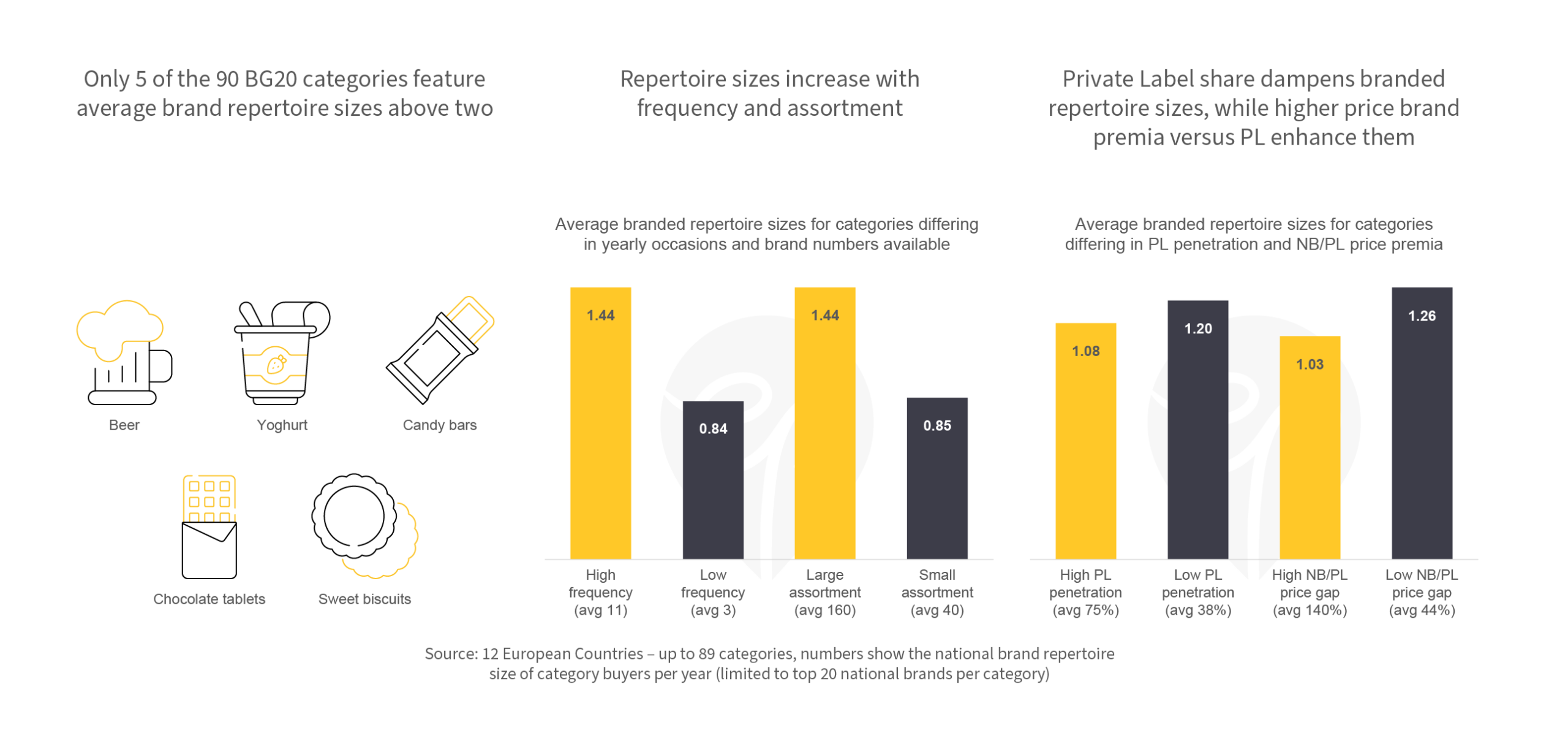
Only 5 of the 90 BG20 categories feature average brand repertoire sizes above two
Last week we showed that in the average category the average buying household chooses just about one national brand per year. This number varies – with some categories in some countries exceeding four brands (yes, I am talking to you, biscuit lovers in the UK and chocolate lovers in Poland).
Across all twelve countries, buyers choose more than two different national brands in only five categories in 2024: Yoghurt, Beer, Candy Bars, Sweet Biscuits, and Chocolate Tablets. Where do we see the smallest brand repertoires? Consumers accept less variety in Canned Veggies, Jam, Conditioners, and Dishwasher Tabs – and seem to be “locked in” to their preferred Razor Blades brand.
Repertoire sizes increase with frequency and assortment
It is well known that consumers differ with respect to how much variety they seek – some are more prone to choose from larger repertoires while others’ choices are more habitual. However, certain category characteristics consistently impact the size of branded repertoires. For example, if we split all categories based on (a) the number of brands on sale and (b) the number of purchase occasions per year, the branded repertoire sizes differ by almost 100%. Where branded assortments are large or frequency is high, branded repertoire sizes are slightly above 1.4 – compared to about 0.84 in categories with small assortments or low frequency. Keep in mind that category brand numbers and category frequency are related: each additional purchase occasion on average translates into six additional brands on offer.
Private Label share dampens branded repertoire sizes, while higher price brand premia versus PL enhance them
Two additional category characteristics matter, but much less. Unsurprisingly, where Private Label is more widely purchased, branded repertoire sizes are smaller. Somewhat surprisingly, branded repertoire sizes are larger where brands’ price premia vs PL are lower. This aligns with findings presented in this blog before, but also in scientific research, that more price variation signals more quality variation – which in turn reduces the commoditization of a category. In such categories shoppers tend to remain more loyal to their preferred brands and are less inclined to switch.