How FMCG volumes and food/beverage spend have evolved over two decades
Stable for a long time, but the pandemic and inflation have led to some substantial changes in expenditure
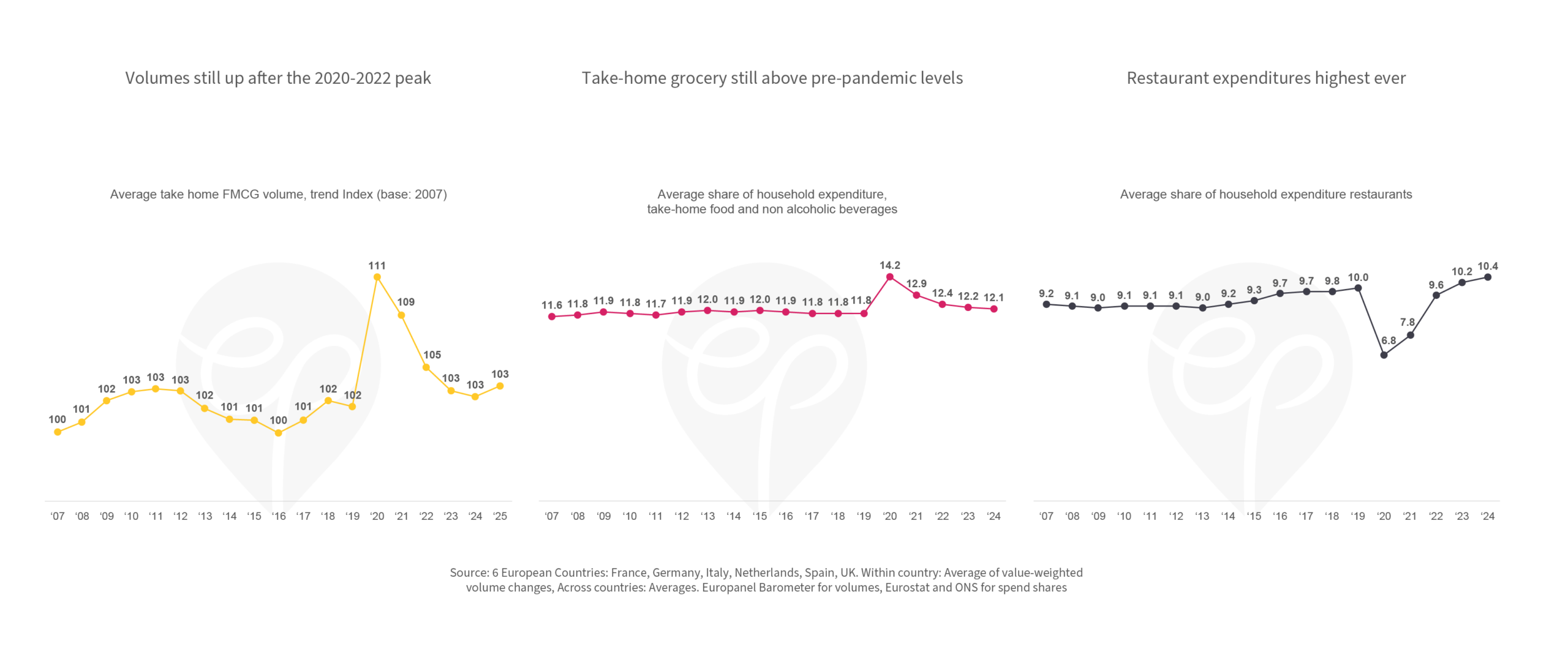
Volumes still up after the 2020-2022 peak
Take home grocery volumes remain strong after the pandemic boost – key factors shaping category and country differences are population growth, population sociodemographic shifts and the affordability of options after recent high price rises.
Take-home grocery still above pre-pandemic levels
As populations become ‘better-off’ the usual trend is that the share of household expenditure spent on take-home food and beverages tends to drop while more money is allocated to discretionary items. High inflation, as well as the pandemic, have resulted in an uptick of the expenditure share going to food and beverages.
Restaurant expenditures highest ever
As wealth increases, eating out usually gains a larger share of household spend. Following the drop during the pandemic, the long-term share growth has been restored, albeit some of that increase is the consequence of higher than average price rises in the restaurant industry (about 1/3 more inflation than overall).